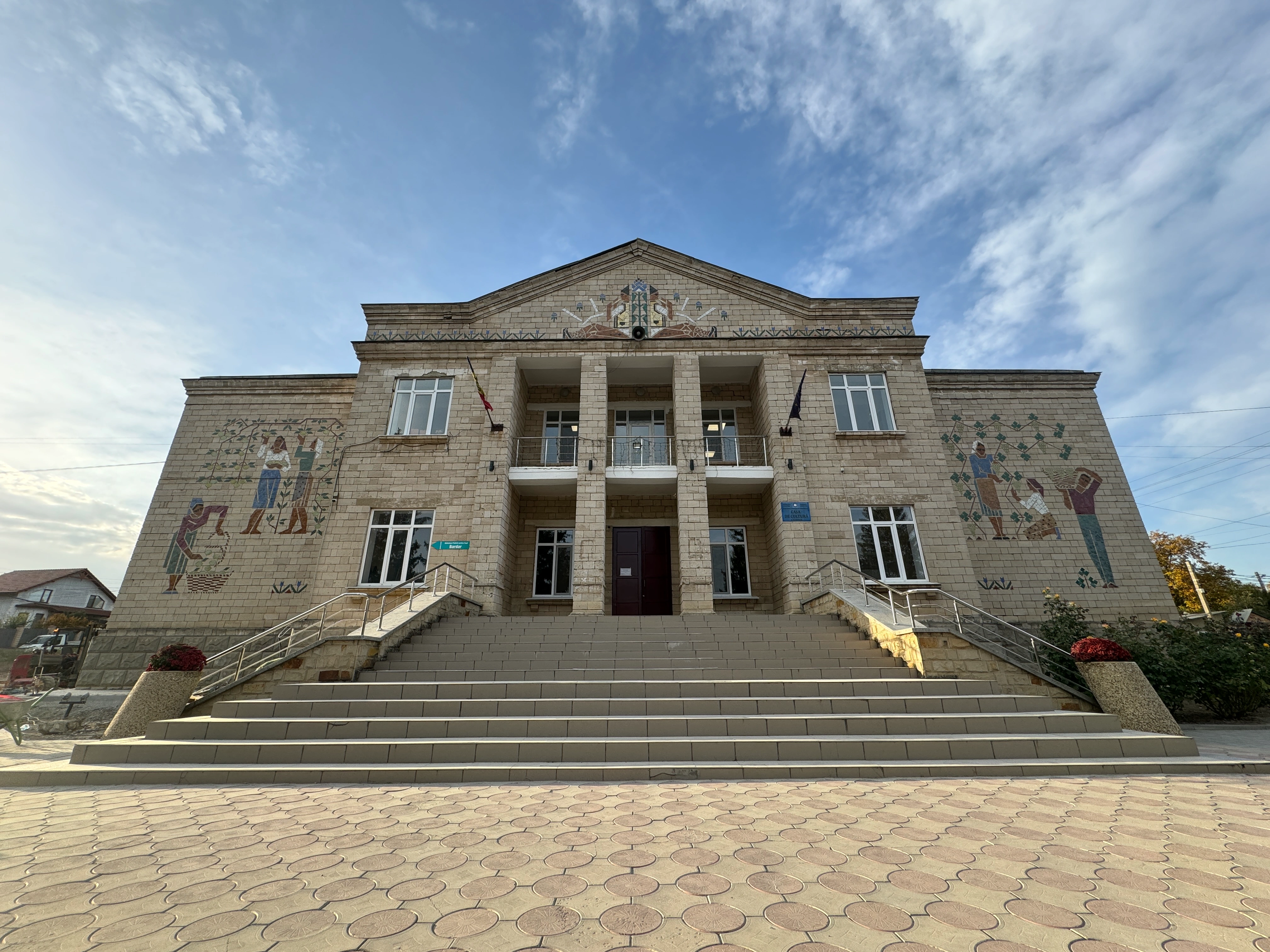
Serving as the beating heart of civic and social life in the former Soviet Union, Palaces of Culture and Houses of Culture were monumental institutions designed to bring education, recreation, and state ideology to the masses. While sharing the same ideological roots, they differed vastly in scale and prestige. Houses of Culture served as everyday community centers in villages and specific neighborhoods, offering essential multi-purpose halls, libraries, and amateur hobby clubs. In contrast, Palaces of Culture were flagship civic monuments built in major cities or funded by massive state enterprises. These grand structures housed vast theatrical auditoriums, marble-lined ballrooms, planetariums, and professional-grade art studios.
Architecturally, they reflect the shifting aesthetics of the era, ranging from opulent, neoclassical Stalinist temples to sleek, utilitarian modernist structures. Often richly decorated with monumental mosaics, stained glass, and regionally inspired frescoes, they were explicitly built to function as social condensers that merged political propaganda with everyday cultural activities.
Today, the legacy of these cultural hubs is complex and highly fragmented. Following the collapse of the USSR, the centralized funding that maintained them vanished, leaving countless facilities abandoned, stripped of their function, and falling into natural decay. While some have been completely privatized and repurposed into commercial spaces or religious institutions, others continue to function, adapting their original infrastructure to serve contemporary community and counterculture needs. Documenting these diverse and often imposing structures offers a vital look into the architectural ambition of the Soviet state and the shifting cultural realities of the post-Soviet landscape.
Als het kloppend hart van het burgerlijke en sociale leven in de voormalige Sovjet-Unie, waren de Cultuurpaleizen en Cultuurhuizen monumentale instellingen die ontworpen waren om educatie, recreatie en staatsideologie naar de massa te brengen. Hoewel ze dezelfde ideologische wortels deelden, verschilden ze enorm in schaal en prestige. Cultuurhuizen dienden als alledaagse gemeenschapscentra in dorpen en specifieke wijken, en boden essentiële multifunctionele zalen, bibliotheken en amateur-hobbyclubs. Cultuurpaleizen waren daarentegen de paradepaardjes onder de civiele monumenten, gebouwd in grote steden of gefinancierd door massale staatsbedrijven. Deze grootse bouwwerken huisvestten enorme theaterzalen, met marmer beklede balzalen, planetaria en professionele kunststudio's.
Architectonisch weerspiegelen ze de veranderende esthetiek van die tijd, variërend van weelderige, neoklassieke stalinistische tempels tot strakke, utilitaire modernistische bouwwerken. Ze waren vaak rijkelijk versierd met monumentale mozaïeken, glas-in-lood en regionaal geïnspireerde fresco's, en werden expliciet gebouwd om te functioneren als sociale condensators die politieke propaganda lieten samensmelten met alledaagse culturele activiteiten.
Vandaag de dag is de erfenis van deze culturele knooppunten complex en sterk gefragmenteerd. Na de val van de USSR verdween de gecentraliseerde financiering die hen in stand hield, waardoor talloze faciliteiten werden verlaten, hun functie verloren en in natuurlijk verval raakten. Terwijl sommige volledig zijn geprivatiseerd en omgebouwd tot commerciële ruimtes of religieuze instellingen, blijven andere functioneren door hun oorspronkelijke infrastructuur aan te passen aan hedendaagse gemeenschaps- en tegencultuurbehoeften. Het documenteren van deze diverse en vaak imposante bouwwerken biedt een cruciale blik op de architectonische ambitie van de Sovjetstaat en de veranderende culturele realiteit van het post-Sovjetlandschap.
Будучи бьющимся сердцем гражданской и общественной жизни бывшего Советского Союза, Дворцы и Дома культуры представляли собой монументальные учреждения, созданные для несения просвещения, досуга и государственной идеологии в массы. Имея общие идеологические корни, они существенно различались по масштабу и статусу. Дома культуры служили повседневными общественными центрами в деревнях и отдельных районах, предлагая базовые многофункциональные залы, библиотеки и любительские кружки по интересам. Дворцы культуры, напротив, были флагманскими гражданскими монументами, возводимыми в крупных городах или финансируемыми богатыми государственными предприятиями. В этих грандиозных зданиях размещались огромные театральные залы, мраморные танцевальные площадки, планетарии и профессиональные художественные студии.
В архитектурном плане они отражают меняющуюся эстетику эпохи — от роскошных неоклассических сталинских зданий до строгих утилитарных сооружений советского модернизма. Часто богато украшенные монументальными мозаиками, витражами и фресками с региональными мотивами, они строились именно для того, чтобы служить «социальными конденсаторами», объединяющими политическую пропаганду с повседневной культурной деятельностью.
Сегодня наследие этих культурных центров сложно и крайне неоднозначно. После распада СССР централизованное финансирование, за счет которого они существовали, исчезло, в результате чего бесчисленные здания оказались заброшены, утратили свои функции и пришли в естественный упадок. В то время как одни из них были полностью приватизированы и перепрофилированы под коммерческие помещения или религиозные учреждения, другие продолжают работать, адаптируя свою первоначальную инфраструктуру к современным потребностям общества и контркультуры. Документирование этих разнообразных и зачастую внушительных сооружений дает важнейшее представление об архитектурных амбициях советского государства и меняющихся культурных реалиях постсоветского пространства.