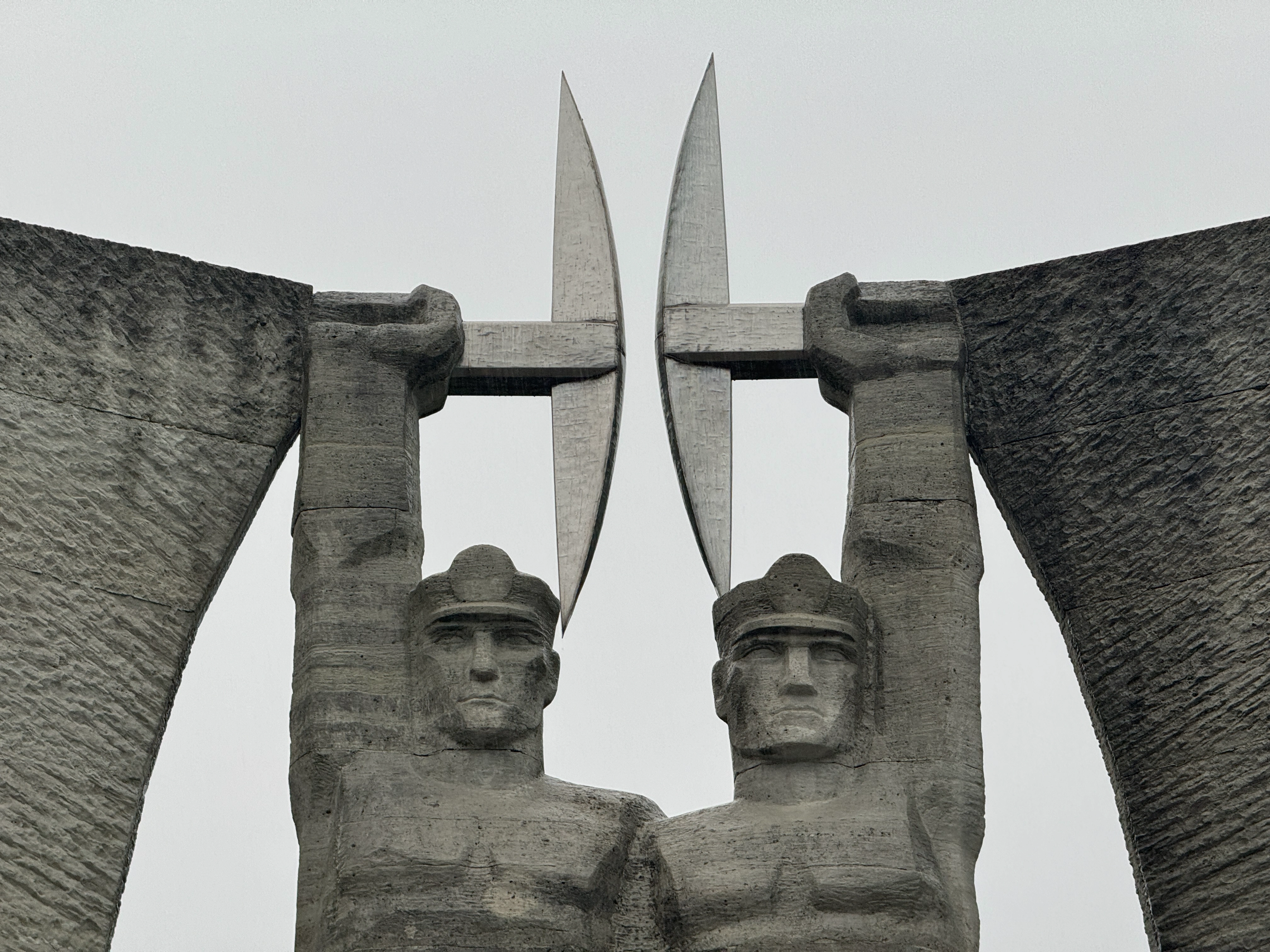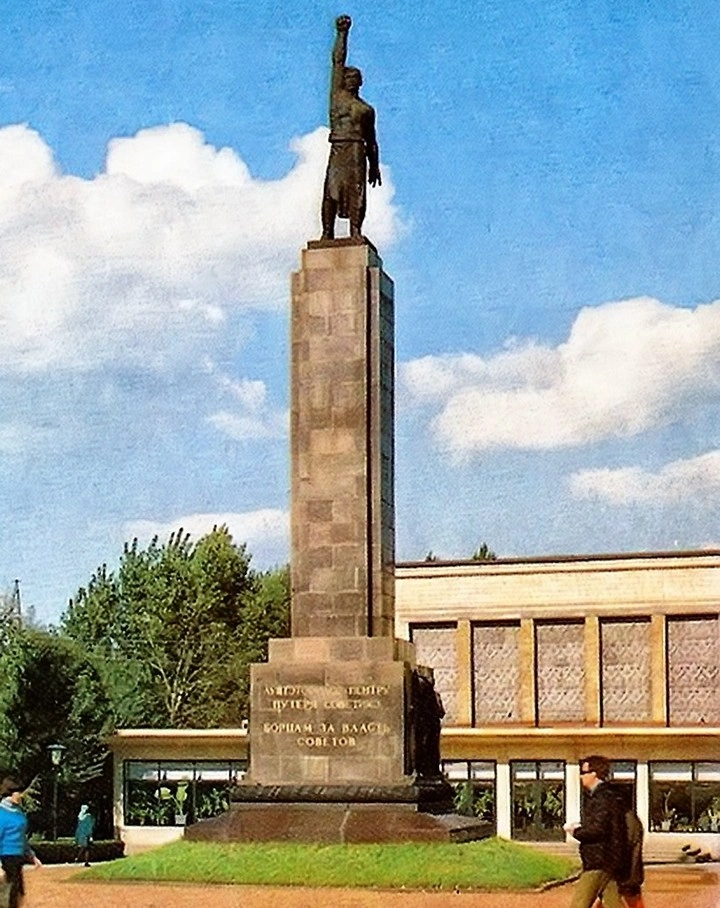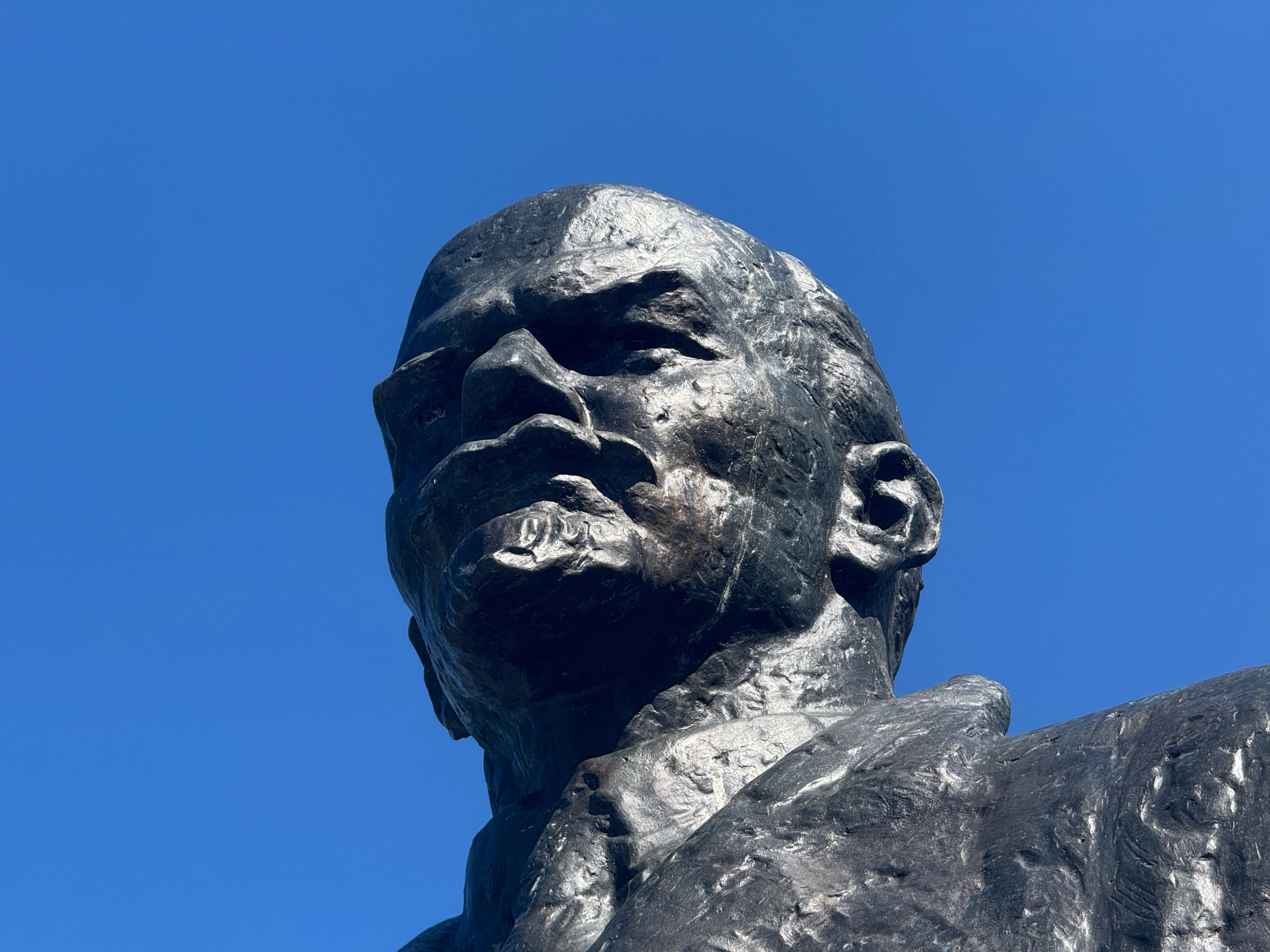
From Kaliningrad to Vladivostok, monumental art defined the physical and cultural landscape of the former Soviet Union and the Eastern Bloc. Designed as colossal tools of state propaganda, these structures were built to project the power, ideology, and achievements of the communist era directly into public spaces. The urban environment was anchored by ubiquitous statues of political and military leaders, such as Vladimir Lenin, Karl Marx, and Mikhail Frunze, serving as ever-present ideological markers in daily life.
Ranging from the strict guidelines of socialist realism to bold, abstract modernist forms, these monuments were designed on an awe-inspiring scale. The built landscape features vast war memorials and solemn eternal flames commemorating the fallen, alongside towering concrete and steel tributes dedicated to the glorification of the working class. As the Cold War progressed, the focus also expanded skyward, resulting in striking, futuristic monuments celebrating triumphant cosmonauts and heroes of space exploration like Yuri Gagarin.
Today, this monumental legacy is highly contested and rapidly disappearing. Sweeping decommunization laws, shifting political climates, and the ongoing Russia-Ukraine war have drastically accelerated the removal of these structures across Eastern Europe, particularly in Ukraine, Poland, and the Baltic states. While countless statues are being dismantled or destroyed due to their association with Soviet oppression, a small fraction is being preserved in specialized open-air museums and sculpture parks. Documenting these polarizing, colossal structures offers a vital and fleeting glimpse into a disappearing era of monumental public art before it is erased from the horizon forever.