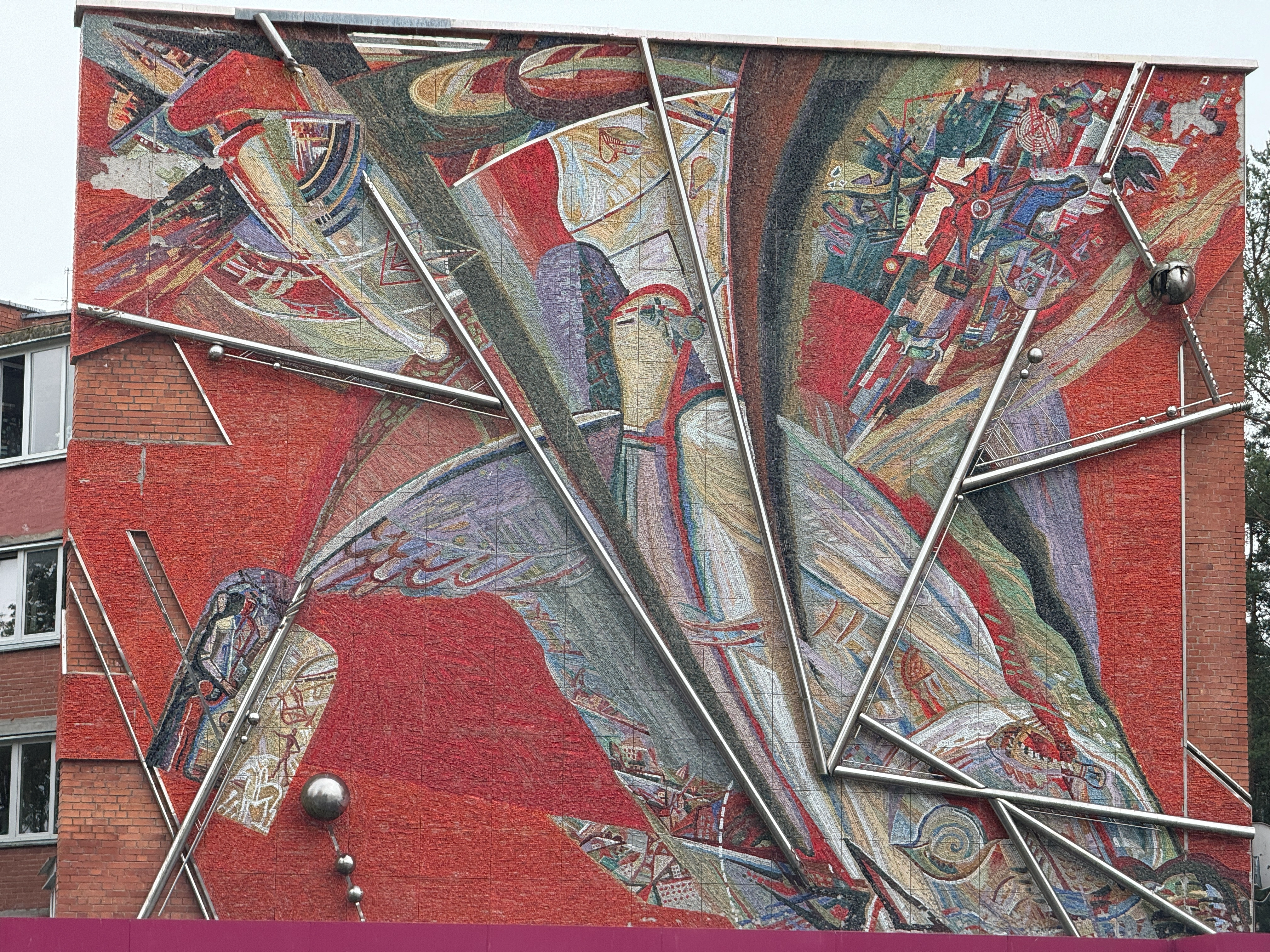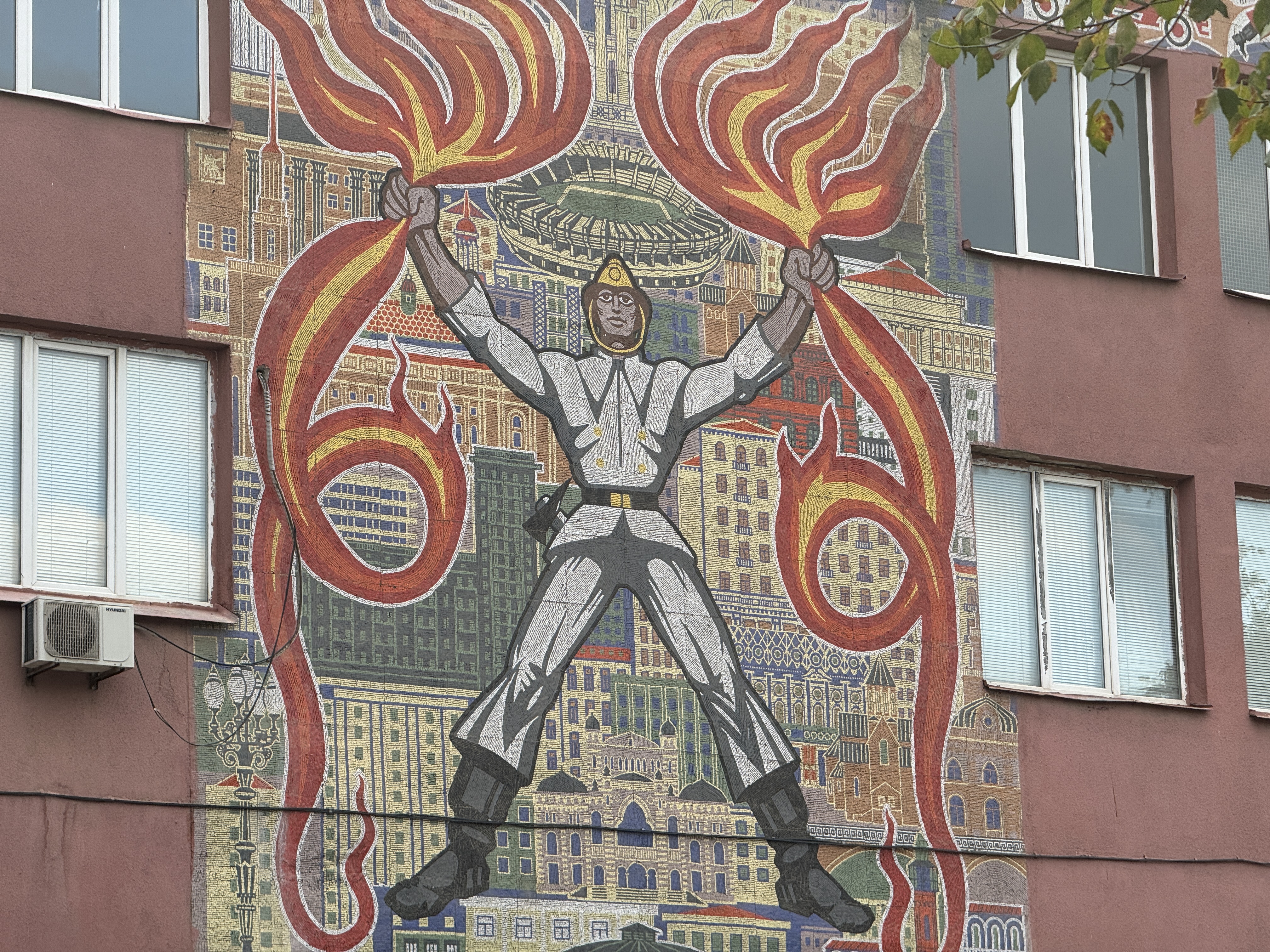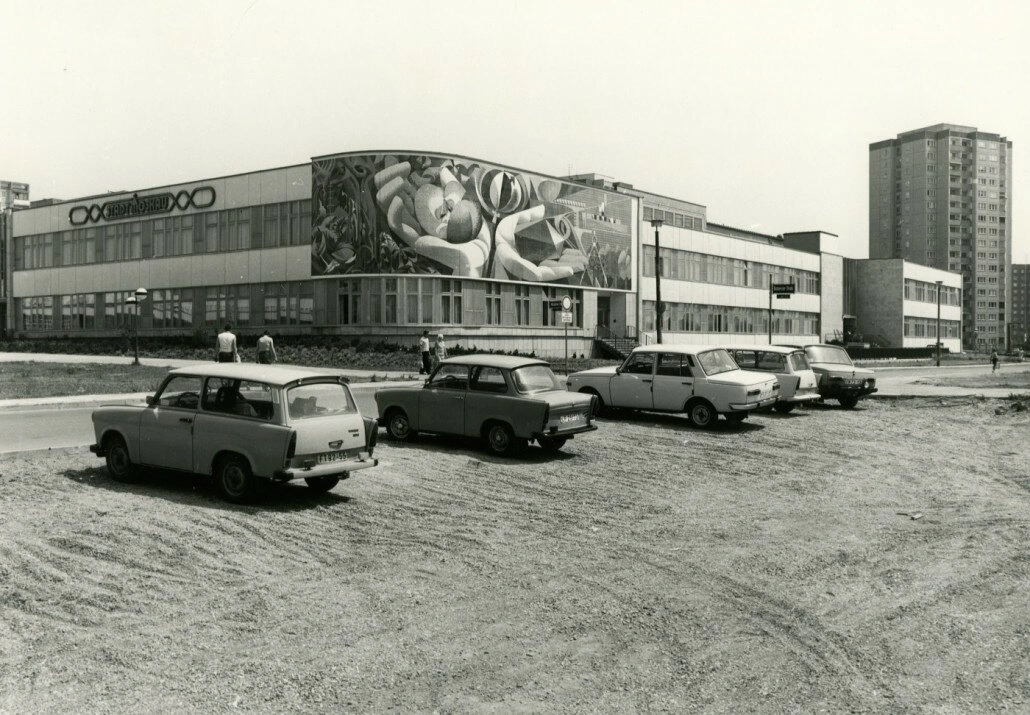
The mosaic wall mural The Relationship of Man to Nature and Technology was created in 1984 by the Spanish artist Josep Renau for the Erfurt cultural and recreational center Stadt-Moskau. Renau, who had relocated to East Germany after exile from Spain, became a leading figure in the application of monumental mosaics as ideological art forms within the GDR. The mural was composed of approximately 70,000 glass mosaic tiles and measured 7 by 30 meters. Its theme reflected the socialist vision of harmony between humanity, nature and technology, a common motif in late Soviet-era cultural programs and architectural design.
As an architectural artwork integrated into a public building, the mural exemplified the GDR's emphasis on art as a collective, educational and political instrument. It was designed not only to decorate but to convey ideological messages of progress, collectivism and the merging of natural and technological worlds under socialism. The work belonged to Renau's broader series of mosaic projects across the Eastern Bloc, where he produced several monumental artworks for state institutions, universities and cultural houses. The mural originally adorned the facade of the Stadt-Moskau cultural center, which functioned as a hub for social gatherings, performances and exhibitions during the late GDR period.
After German reunification, the building was gradually decommissioned, and by 2009 it was demolished. Recognizing the cultural and historical significance of the mosaic, preservationists secured and reinstalled it at a new location in Erfurt. Its restoration was supported by the Wüstenrot Foundation, the city of Erfurt, and both municipal and regional funding. The mural now stands as one of the few surviving examples of Renau's monumental glass mosaics in Germany, representing the transfer of artistic traditions between Spain and the socialist world, as well as the cultural strategies of the GDR in shaping urban public space.
The mosaic is now located in a new public space in Erfurt, where it was reinstalled following the demolition of its original building. As an outdoor monumental artwork, it can be freely viewed by the public.