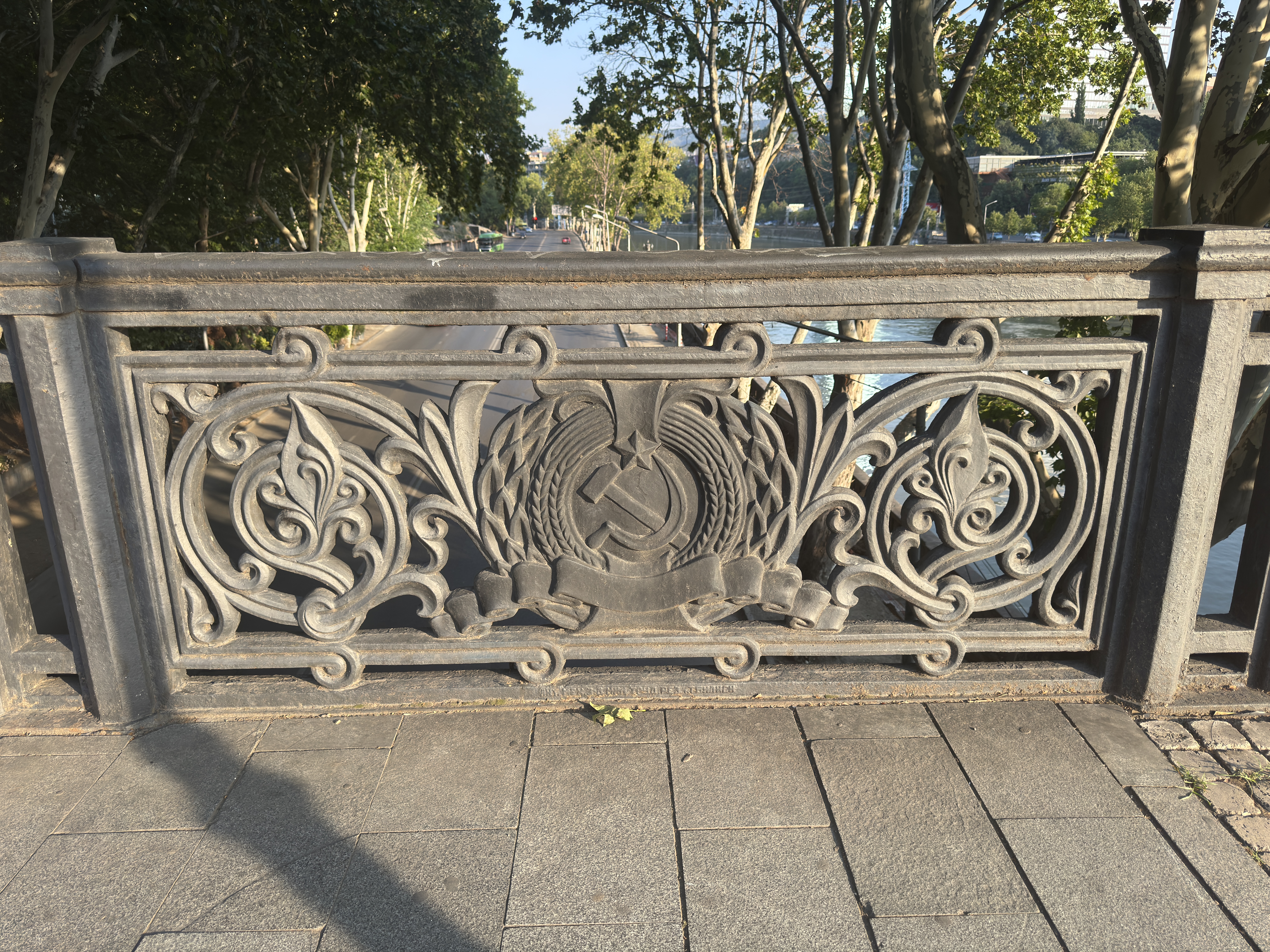
The Galaktion Tabidze Bridge in central Tbilisi spans the Kura (Mtkvari) River and features iron railings with decorative cast panels. These include prominent reliefs of the hammer and sickle emblem within a sheaf-wrapped Soviet crest topped by a five-pointed star. Installed during the Soviet period, these ornaments symbolized communist ideology and the official visual language of the USSR, embedded into utilitarian infrastructure projects across the republics.
Along the bottom of each panel is a Cyrillic marking: "ЛИТ. МЕХ. З-Д МИН. ТРУД. РЕЗ. ТБИЛИСИ", identifying the Tbilisi Foundry and Mechanical Plant under the Ministry of Labor Reserves as the manufacturer. This indicates local production of the ironwork components in line with state-run industrial organization.
Though Georgia adopted legislation in 2011 to remove Soviet and fascist symbols from public spaces, the Tabidze Bridge ornaments remain fully in place. Unlike some post-Soviet contexts where such symbols have been covered with flags or plaques, here the reliefs are exposed and intact. However, many of the hammer and sickle emblems have been defaced with spray paint, usually red crosses or letters, though some panels remain untouched. The bridge thus displays a unique contrast between preservation, neglect and protest.
Similar metal railing ornaments once lined the Daugava river promenade in Riga, Latvia, where nearly fifty hammer and sickle emblems were dismantled by city authorities in 2022.
The bridge is far from the old city center but walkable from the newer central districts. Alternatively, take public transport or a taxi to Galaktion Tabidze Bridge in eastern Tbilisi.